
What Factors influence obtaining Quality Print?
For more information, please check our Pad Printing Faq.
For comprehensive guidance, refer to our Pad Printing Faq to enhance your understanding.
For more information, check our Pad Printing Faq.
Our Pad Printing Faq also provides insights into common issues and solutions.
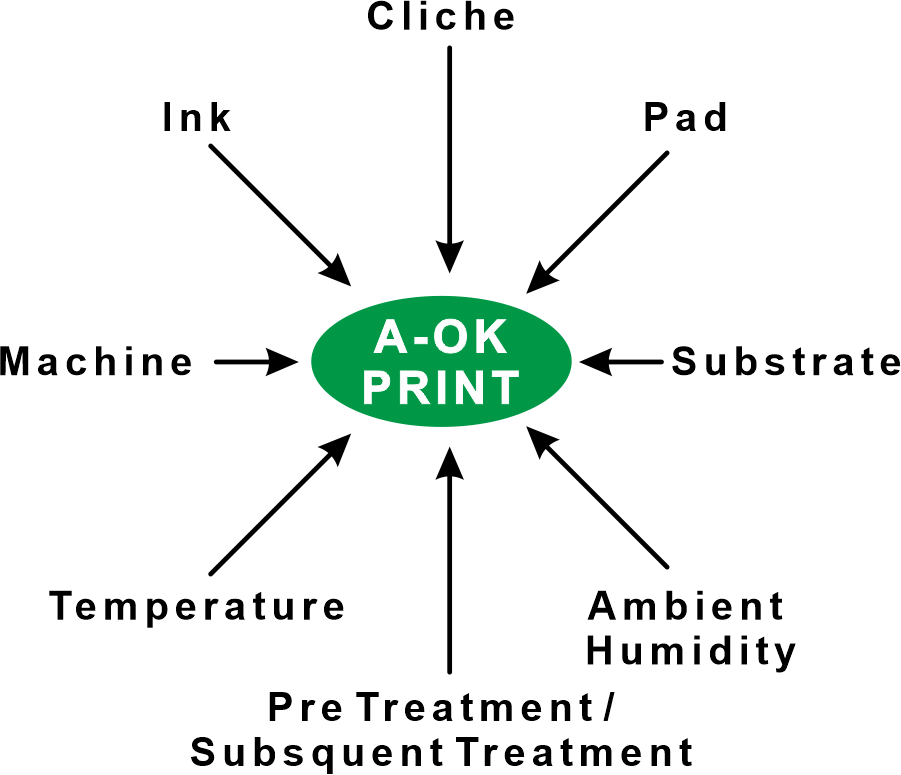
From the facts mentioned so far, it becomes evident that the result of printing is influenced by a multitude of factors. Experience shows that the root cause of a faulty print is virtually never to be found in the mechanics of the printing press.
In our Pad Printing Faq, we explore various factors that impact print quality.
Defects in the Pad Printing Machine itself are nearly always obvious, clearly definable and can be remedied by the technicians of the manufacturer. Hence, this issue can be ignored. To eliminate problems connected with printing, it is of greatest importance to describe deficiencies in as detailed a way as possible.
Any Pad Printing technician has difficulties on the telephone when a customer makes statements which are only general in nature. Not even the best technician can be of assistance when simply told “the press won’t print” or “the quality of the print is poor.”
Consult our Pad Printing Faq for troubleshooting tips directly from experts.
Sources of Deficiency in getting Optimal Printing Results
For more details on deficiencies, please refer to our Pad Printing Faq.
Deficiencies most commonly found in printed material:
– no opacity
– misregister
– motif distorted
– blurring
– poor leveling of ink
– problematic overprintability in multi color prints
– color does not correspond with artwork
– spiderweb effect on contours
– screen dots are visible/are not visible
– fine lines run together
– large areas not completely covered
– small bubbles (pinholes) visible
– motif smudged
– ink does not adhere to substrate
– desired grade of gloss cannot be achieved
To understand these deficiencies better, check our Pad Printing Faq for detailed explanations.
During printing operation:
– pad does not pick up ink
– no deposit or only partial deposit of ink by pad
Discover solutions for these issues in our Pad Printing Faq.
A number of additional problems arise, which are, however, very particular to the individual areas:
Pre-operational deficiencies, e.g.:
– inadequate pre-treatment
– no or only partial deposit of ink on substrate
Post-operational deficiencies, e.g.:
– ink/color turns after some time
– ink cannot be lacquered
– ink does not adhere to substrate
Further insights can be found in our Pad Printing Faq section.
Containment of Deficiencies
In order for any problems which arise to be contained quickly, the individual components (e.g., substrate, pad, cliche and ink) should be systematically changed or replaced.
To resolve these issues, please consult our Pad Printing Faq for effective strategies.
The settings of the Pad Printing Machine and the ambient conditions (humidity!) should be checked. Making individual sample prints at a higher or lower printing speed or blowing on the pad can also be helpful.
Gain greater insights into settings adjustments in our Pad Printing Faq.
Description of Problems and Proposed Solutions
For a complete description of problems, our Pad Printing Faq outlines key solutions.
Potential Problems in Printing – Description of Problems and Proposed Solutions
| Problem | Solution |
|---|---|
| 1. Too thick. | 1. Add thinner. |
| 2. Dried out. | 2. Clean cliche with thinner. |
| 3. Wrong thinner. | 3. Use slower thinner or one suited to ink system. |
| Problem | Solution |
|---|---|
| 1. Insufficient etching depth. | 1. Produce new cliche with greater etching depth. |
| 2. Wrong screen ruling. | 2. Test new cliche with different fineness of halftone screen. |
| 3. Surface physically damaged. | 3. Use new cliche. |
| Problem | Solution |
|---|---|
| 1. Too flat. | 1. Use more tapered pad shape. |
| 2. Surface roughened. | 2. Replace pad. |
| 3. Pad swollen. | 3. Blow air on pad. |
| 4. Surface too oily | 4. Clean pad (several times) or replace. |
| Problem | Solution |
|---|---|
| Problem | Solution |
|---|---|
| 1. Too thick. | 1. Add thinner. |
| 2. Dried out. | 2. Clean cliche with thinner. |
If ink pulls on pad fibers during pickup, it is too thick and needs thinning.
Potential Problems in Printing – Description of Problems and Proposed Solutions
| Problem | Solution |
|---|---|
| 1. Dried out on pad. | 1. Use slower thinner. |
| 2. Too wet on pad,not tacky. | 2. Use faster thinner. |
| Problem | Solution |
|---|---|
| 1. Insufficient etching depth. | 1. Produce new cliche with greater etching depth. |
| 2. Etched too deeply. | 2. Produce new cliche with shal-lower etching depth. |
| 3. Wrong screen ruling. | 3. Use new cliche with different fineness of half-tone screen. |
| Problem | Solution |
|---|---|
| 1. Wrong shape pad. | 1. Use more tapered pad shape. |
| 2. Surface rough-ened. | 2. Replace pad. |
| Problem | Solution |
|---|---|
| 1. Soiled surface(grease, oil, per-spiration, mold release agents..). | 1. Pre-clean objects. |
| 2. Surface insufficiently pre-treated (polyolefins). | 2. Check pre-treat-ment, repeat as required. |
| Problem | Solution |
|---|---|
| 1. Print speed set-ting too slow. | 1. Maintain uniform cycle time. |
| 2. High ambient(room) temperature. | 2. Optimal room temperature is 18 °C – 20 °C or 65 °F – 68 °F |
ncomplete or spotty deposit of ink by pad is referred to as “splitting.” It plays a minor role in a continuously running process. The problem only arises when cycle times fluctuate or after short breaks. The pad deposits the dried ink all at one time, producing an inconsistent image. Using fast thinners will decrease ink build-up and improve ink deposition.
Potential Problems in Printing – Description of Problems and Proposed Solutions
| Problem | Solution |
|---|---|
| 1. Too thin. | 1. Reduce amount of thinner. |
| 2. Transparent ink. | 2. Use opaque color shade. |
| 3. Wrong ink system. | 3. Use pad printing ink . |
| 4. Scanty ink transfer. | 4. Locate defect in cliché or pad. |
| Problem | Solution |
|---|---|
| 1. Insufficient etching depth. | 1. Produce new cliche with greater etching depth. |
| 2. Areas not screened. | 2. Screen area. |
| 3. Areas not slanted. | 3. Slant areas. |
| 4. Wrong cliche type. | 4. Use cliche which allows screen to be etched with it. |
| 5. Wrong screen ruling. | 5. Test new cliche with different fineness of half-tone screen. |
| Problem | Solution |
|---|---|
| 1. Too flat. | 1. Use more tapered pad shape. |
| 2. Porous surface. | 2. Replace pad. |
| 3. Too soft. | 3. Use harder pad. |
| Problem | Solution |
|---|---|
| 1. Soiled surface. | 1. Clean surface with alcohol. |
| 2. Dark substrate color. | 2. Double print. |
| 3. Surface too rough. | 3. Use harder, more tapered pad. |
| 4. Stress cracks (esp. on injection molded parts). | 4. Use milder ink/thinner system or quick drying ink/thinner to avoid any dissolution of substrate. |
| Problem | Solution |
|---|---|
| 1. Soiling from greasy residues on accessories(auxiliaries). | 1. Clean cliche,doctor blade, etc.before installing. |
| 2. Doctor blade sags. | 2. Use harder or thicker doctor blade (or see cliche points 2 and 3). |
This problem very often occurs in pad printing, and cannot always be solved satisfactorily. Due to the low degree of ink transfer in pad printing, 100 % opacity cannot be achieved on many objects with only a single printing, especially in the case of dark substrates. Increased hiding power can be attained by double or triple printing or preprinting with white.
Potential Problems in Printing – Description of Problems and Proposed Solutions
| Problem | Solution |
|---|---|
| Problem | Solution |
|---|---|
| 1. Individual motifs not correctly aligned. | 1. If motifs are all on one cliche,film must be cor-rected and new cliche must be produced. |
| Problem | Solution |
|---|---|
| 1. Pads mounted off center. | 1. Readjust pad. |
| 2. Pads not same shape. | 2. Replace pads with ones of correct shape. |
| 3. Pads not of same hardness. | 3. All pads should be of same Shore hardness. |
| 4. Head stroke not same over cliche and substrate material. | 4. Adjust head stroke. |
| Problem | Solution |
|---|---|
| 1. Material is pliable. | 1. Switch to different material. |
| Problem | Solution |
|---|---|
| 1. Jig not perfect. | 1. Check for play in jig, refabricate as needed. |
| 2. Carre,adjustable, or rotary indexing table inaccurate. | 2. Check indexing. |
| 3. Mounting screws not tight. | 3. Screws not properly tightened during initial setup; they become loose during printing operation. Tighten screws. |
The simplest way to contain these deficiencies is to produce a new cliche with precisely registered film.
Potential Problems in Printing – Description of Problems and Proposed Solutions
| Problem | Solution |
|---|---|
| Problem | Solution |
|---|---|
| 1. Motif not aligned with cliche. | 1. Hold film over finished print and compare; correct and pro- duce new cliche as needed. |
| Problem | Solution |
|---|---|
| 1. Wrong pad shape (pad too small). | 1. Test different pad shape. |
| 2. Too soft or too hard. | 2. Test other hard-nesses. |
| 3. Stroke force too great. | 3. Decrease the head stroke. |
| 4. Stroke force on cliche and sub-strate not equal. | 4. Correct the head stroke. |
| 5. Touch down at wrong point. | 5. Align pad to cor-rect contact area. |
| Problem | Solution |
|---|---|
| 1. Very soft/pliable. | 1. Cool objects before printing to harden mate-rial; inflate hol-low body. |
| 2. Material allows distortion. | 2. Switch to differ-ent material. |
| 3. Very deep recesses/depressions. | 3. Use pad assemblies or jigs which compensate for depressed areas; produce special pad as needed. |
| 4. Edges in proximity to motif. | 4. Use pad assemblies or jigs which compensate for depressed areas; produce special pad as needed. |
| Problem | Solution |
|---|---|
| 1. Unsuitable jig. | 1. Modify jig so that substrate is supported in all print/contact areas. |
| 2. Work piece mounted at wrong angle. | 2. Test correct angle using adjustable wedge. |
| 3. Jig too unstable. | 3. Produce new jig. |
Distortion means that a printed rectangle, for example, does not show any right-angled corners, and has more the shape of a cushion. Distortion occurs primarily in very curved motifs or in motifs which are in proximity to an edge of the area to be printed or of the substrate. It is often impossible to achieve a 100 % correction. It is possible to make a wraparound print, but improvements with this method are also limited.
Potential Problems in Printing – Description of Problems and Proposed Solutions
| Problem | Solution |
|---|---|
| 1. Too thick. | 1. Add thinner. |
| 2. Too thin. | 2. Use new ink. |
| 3. Too slow. | 3. Use faster thinner. |
| Problem | Solution |
|---|---|
| 1. Poor etching. | 1. Examine cliche with magnifying glass, produce new cliche as needed. |
| 2. Etching too deep. | 2. Produce new cliche with shallower etching depth. |
| 3. Wrong cliche type. | 3. Replace with correct cliche. |
| 4. Wrong screen ruling. | 4. Test new cliche with different fineness of halftone screen. |
| Problem | Solution |
|---|---|
| 1. Too soft. | 1. Use harder pad. |
| 2. Wrong shape. | 2. Test different shape. |
| Problem | Solution |
|---|---|
| 1. Soiled surface. | 1. Pre-clean with alcohol. |
| 2. Not free of distortion. | 2. Switch to different material. |
| 3. Great differences in height. | 3. Use pad assembly or special pad. |
| 4. Printing in proximity to edges. | 4. Jig should support substrate adjacent to edges, to prevent pad from extending over edge. |
| 5. Very structured surface. | 5. Use hard, pointed pad. |
| Problem | Solution |
|---|---|
| 1. Jig unstable. | 1. Refabricate jig. |
| 2. Fast cycle time with bulky pad. | 2. Reduce speed, adjust setting to delayed cycle in front position to prevent pad from wobbling during print stroke. |
Blurred print is understood as the indistinct, hazy reproduction of lines or letters. This deficiency is often confused with distortion.
Potential Problems in Printing – Description of Problems and Proposed Solutions
| Problem | Solution |
|---|---|
| 1. Too thick. | 1. Add thinner. |
| 2. Too thin. | 2. Remix ink. |
| 3. Ink mixed insufficiently. | 3. Mix ink well before pouring into ink trough. |
| Problem | Solution |
|---|---|
| 1. Wrong etching depth. | 1. Check etching depth, produce new cliche as needed |
| 2. Wrong screen ruling. | 2. Test new cliche with different fineness of half tone screen. |
| Problem | Solution |
|---|---|
| 1. Surface too rough | 1. Replace pad. |
| 2. Wrong shape. | 2. Test different shape. |
| 3. Oily surface. | 3.Clean with alcohol or replace pad |
| Problem | Solution |
|---|---|
| 1. Soiled surface. | 1. Pre-clean with alcohol. |
| Problem | Solution |
|---|---|
| 1. Ink contaminated by grease, oil, silicone, etc. | 1. Use new ink and keep accessories free of contaminants, or clean before use |
Potential Problems in Printing – Description of Problems and Proposed Solutions
| Problem | Solution |
|---|---|
| 1. Too thick. | 1. Use new ink. |
| 2. Too slow. | 2. Use faster thinner. |
| Problem | Solution |
|---|---|
| 1. Too deep. | 1. Produce new cliche with shallower etching depth. |
| 2. Wrong screen ruling. | 2. Test new cliche with different fineness of half tone screen. |
| Problem | Solution |
|---|---|
| 1. Rough surface. | 1. Replace pad. |
| Problem | Solution |
|---|---|
| 1. Very slick, dense material structure. | 1. Substrates where surfaces cannot be dissolved by thinner are esp. problematic (e.g., glass). |
| Problem | Solution |
|---|---|
| 1. Insufficient pretreatment or subsequent treatment. | 1. Heat objects before printing, or ventilate them for thinner to evaporate faster. |
During high speed printing operations, the last ink printed may be removed by next pad. This occurs particularly on larger surfaces, where material cannot be dissolved by thinner, or with slower inks in connection with carree or rotary indexing tables and linear belts. The problem hardly ever arises when adjustable tables are used. The best solution is to pre-heat objects or dry them with cold or hot air at intervals during the printing run
Potential Problems in Printing – Description of Problems and Proposed Solutions
| Problem | Solution |
|---|---|
| 1. Too thin. | 1. Use new ink. |
| 2. Wrong ink system. | 2. Use pad printing inks. |
| 3. Wrong color match (in custom colors). | 3. Check proportions or re-mix as needed. |
| 4.Transparent ink. | 4. Use more opaque ink. |
| 5. Shade cannot be mixed. | 5. In this case no solution possible. Test another ink system. |
| Problem | Solution |
|---|---|
| 1. Wrong etching depth. | 1. Check etching depth or produce new cliche as needed. |
| 2. Wrong screen ruling. | 2. Test new cliche with different fineness of half tone screen. |
| 3. Wrong type of cliche. | 3. Replace cliche. |
| Problem | Solution |
|---|---|
| 1. Wrong pad shape. | 1. Use hard, pointed pad. |
| 2. Surface too rough. | 2. Replace pad. |
| Problem | Solution |
|---|---|
| 1. Dark substrate color. | 1. Try to attain thicker ink deposit by double printing. |
| 2. Changing material types. | 2. See below. |
| Problem | Solution |
|---|---|
| 1. Only printed once. | 1. Test double or triple printing. |
This problem occurs frequently in pad printing. It is, however, often impossible to achieve the original shade, as it cannot be mixed from the colors available in pad printing. To lessen the influence of the substrate color, the options are to: pre-print using white, double print, or triple print to increase the opacity. Each method does, however, have its drawbacks, and should be tested beforehand.
Potential Problems in Printing – Description of Problems and Proposed Solutions
| Problem | Solution |
|---|---|
| 1. Too thin. | 1. Add thinner. |
| 2. Ink build-up on pad. | 2. Use faster thinner. |
| Problem | Solution |
|---|---|
| 1. Etching too deep. | 1. Produce new cliche with shallower etching depth. |
| 2. Wrong screen ruling. | 2. Produce new cliche with fine half-tone screen. |
| Problem | Solution |
|---|---|
| 1. Wrong pad shape. | 1. Use more tapered pad form. |
| 2. Surface too rough. | 2. Replace pad. |
| Problem | Solution |
|---|---|
| 1. Surface becomes charged with static electricity. | 1. Install ionizing unit on printing press. |
| Problem | Solution |
|---|---|
| 1. Humidity too low. | 1. Raise humidity to approx. 60 % – 80 %. |
| 2. Cycle time too fast. | 2. Reduce printing speed. |
| 3. Intermittent operation of machine. | 3. Regulate to constant cycle times. |
Improvement can be achieved by grounding press. Splotches or spiderwebs most often occur with materials such as polystyrene, polycarbonate, or acrylics.
Screen dots are desirable for some prints, but not for others. Some photopolymer cliches cannot be produced without a screen, or only with a certain type of screen. With steel cliches, the screen is only exposed in for support of the doctor blade, to allow printing of larger motifs over an entire surface.
| Problem | Solution |
|---|---|
| 1. Too thick. | 1. Thick ink with fast thinner produces visible screen dots. |
| 2. Too thin. | 2. Thin ink with slow thinner (retarder) causes invisible screen dots. |
| Problem | Solution |
|---|---|
| 1. Etching too deep. | 1. Produce new cliche with shallower etching depth. |
| 2. Wrong screen ruling. | 2. Depending on results desired, use finer screen for invisible screen dots or coarser screen for visible screen dots |
| 3. Wrong cliche type. | 3. Use cliche type suited to screen type. |
| Problem | Solution |
|---|---|
| 1. Wrong pad shape. | 1. Depending on results desired, use more tapered pad for visible screen dots or flatter pad for invisible screen dots. |
| 2. Surface too rough. | 2. Replace pad. |
| Problem | Solution |
|---|---|
| 1. Surface too coarse/ very structured. | 1. In this case, not the screen dots are visible, but the surface structure. |
| Problem | Solution |
|---|---|
| 1. Poor quality of artwork. | 1. Check screen dot pattern on film or expose in new screen. |
Blurred print is understood as the indistinct, hazy reproduction of lines or letters. This deficiency is often confused with distortion.
Potential Problems in Printing – Description of Problems and Proposed Solutions
| Problem | Solution |
|---|---|
| 1. Too thin. | 1. Use new ink. |
| 2. Too slow; ink smears. | 2. Use faster thinner and/or blow on pad. |
| Problem | Solution |
|---|---|
| 1. Etching too deep. | 1. Produce new cliche with shallower etching depth. |
| 2. No graduated etching in fine motif. | 2. Only possible with strip steel/steel cliches. |
| 3. Wrong cliche type. | 3. Use different cliche type. |
| Problem | Solution |
|---|---|
| 1. Wrong pad shape. | 1. Use more acute (more pointed) shape. |
| 2. Surface too rough. | 2. Replace pad. |
| Problem | Solution |
|---|---|
| Problem | Solution |
|---|---|
| 1. Head stroke set too deep. | 1. Causes crushing; adjust head stroke. |
This problem occurs with cliches having both a large surface and fine lines in one motif, because the surfaces should be etched deeper and with screen, but the lines are to be etched flat and without screen.
Potential Problems in Printing – Description of Problems and Proposed Solutions
| Problem | Solution |
|---|---|
| 1. Too thin. | 1. Use new ink. |
| 2. Wrong ink system. | 2. Use another pad printing ink. |
| 3. Transparent ink. | 3. Use opaque ink. |
| Problem | Solution |
|---|---|
| 1. Etching too shallow. | 1. Produce new cliche with greater etching depth. |
| 2. Wrong cliche type. | 2. Use different cliche type. |
| 3. Wrong screen ruling. | 3. Test new cliche with different fineness of halftone screen.. |
| 4. Motif not slanted. | 4. Slant motif. |
| 5. Different etching depth | 5. Produce new cliche with constant etching depth. |
| Problem | Solution |
|---|---|
| 1. Wrong pad shape. | 1. Use more tapered pad shape. |
| 2. Too soft. | 2. Use harder pad. |
| 3. Surface too rough. | 3. Replace pad. |
| Problem | Solution |
|---|---|
| 1. Surface structure too irregular. | 1. Use hard, pointed pad shape. |
| 2. Soiled surface. | 2. Pre-clean objects, e.g., with alcohol. |
| Problem | Solution |
|---|---|
| 1. Doctor blade sags.. | 1. Use stronger doctor blade, or screen areas or slant lines. |
| 2. Only printed once. | 2. Double print or preprint opaque ink. |
This deficiency is easily observed in prints where peripheral areas are acceptable, but coverage (hiding) worsens progressively toward center. See also “Insufficient Opacity.”
Potential Problems in Printing – Description of Problems and Proposed Solutions
| Problem | Solution |
|---|---|
| 1. Too thick. | 1. Add thinner. |
| Problem | Solution |
|---|---|
| 1. Poor etching.. | 1. Examine cliche with magnifying glass; produce new cliche as needed. |
| Problem | Solution |
|---|---|
| 1. Surface damaged. | 1. Replace pad. |
| 2. Wrong shape. | 2. Use more tapered pad shape. |
| 3. Too soft. | 3. Use harder pad. |
| Problem | Solution |
|---|---|
| 1. Statically charged. | 1. Install ionizing unit. |
| 2. Contaminated with dust particles. | 2. Pre-clean. objects, if necessary, using air hose (air jet). |
| Problem | Solution |
|---|---|
| 1. Soiled artwork. | 1. Checks films. |
| 2. Dust present when films are copied. | 2. Produce new cliche. |
| 3. Unclean environment, dust circulating in surrounding air. | 3. Dust particles, which appear to be air bubbles, can be transferred by pad from substrate to ink. |
This deficiency can be contained easily. If bubbles always appear in same place, problem will be found in cliche or pad. If position of bubbles shifts, problem is caused by dust particles or electrostatic charges.
Potential Problems in Printing – Description of Problems and Proposed Solutions
| Problem | Solution |
|---|---|
| 1. Too thin. | 1. Use new ink. |
| 2. Too slow. | 2. Use faster thinner. |
| Problem | Solution |
|---|---|
| 1. Etching too deep. | 1. Produce new cliche with shallower etching depth. |
| 2. Wrong screen ruling. | 2. Test new cliche with different fineness of halftone screen. |
| 3. Wrong cliche type. | 3. Use different cliche type. |
| Problem | Solution |
|---|---|
| 1. Too soft. | 1. Use harder pad. |
| 2. Too little volume. | 2. Use larger pad |
| 3. Prints over edges. | 3. Correct head stroke. |
| 4. Stroke force on cliche and substrate not equal. | 4. Correct head stroke. |
| Problem | Solution |
|---|---|
| 1. Very irregular surface. | 1. Use pad assembly or special pad. |
| 2. Surface not sufficiently precleaned. | 2. Pre-clean surface. |
| 3. Material not smudge free. | 3. Switch to different material. |
| Problem | Solution |
|---|---|
| 1. Jig not fastened tightly enough. | 1. Tighten fixture. |
| 2. Jig unstable. | 2. Produce new cliche. |
| 3. Jig not precisely made, object has too much play. | 3. Produce new cliche |
| 4. Cliche not doctored cleanly. | 4. Sharpen or change doctor blade |
This deficiency often occurs when thinner is added during printing run, where ink and thinner are not properly mixed.
Potential Problems in Printing – Description of Problems and Proposed Solutions
| Problem | Solution |
|---|---|
| 1. Wrong ink system. | 1. Only use ink system suited to substrate according to technical bulletin. |
| 2. Wrong or no hardener. | 2. Corresponding hardener must be added to two component inks. |
| 3. Wrong/imprecise mixing proportions. | 3. Weigh proportion of ink to hardener exactly. |
| Problem | Solution |
|---|---|
| Problem | Solution |
|---|---|
| 1. Oily pad surface. | 1. Clean new pads with alcohol before use. |
| Problem | Solution |
|---|---|
| 1. Soiled surface (grease, oil, perspiration, mold release agents). | 1. Pre-clean substrate with alcohol. |
| Problem | Solution |
|---|---|
| 1. Surface insufficiently or not at all pre-treated. | 1. Check pre-treatment, repeat as needed. |
| 2. Curing (drying) time not observed. | 2. Observe curing time as per technical bulletin. |
| 3. Subsequent treatment of surface insufficient or lacking. | 3. Check subsequent treatment |
This problem frequently occurs because the type of plastic material is unknown, or unsuitable ink systems are used. The requirements for adhesion and scratch proofing are very different due to the respective demands placed on the finished products.
It is expressly recommended that the printing material be checked under the respective conditions of use before printing any production run.
Potential Problems in Printing – Description of Problems and Proposed Solutions
| Problem | Solution |
|---|---|
| 1. Wrong ink system. | 1. Use glossy ink. |
| 2. Insufficient ink transfer. | 2. Double print. |
| Problem | Solution |
|---|---|
| 1. Etching depth too shallow. | 1. Produce new cliche with greater etching depth. |
| 2. Wrong screen ruling. | 2. Test new cliche with different fineness of halftone screen. |
| 3. Wrong cliche type. | 3. Use different cliche type. |
| Problem | Solution |
|---|---|
| 1. Surface too rough. | 1. Replace pad. |
| 2. Wrong shape. | 2. Use more tapered pad shape. |
| Problem | Solution |
|---|---|
| 1. Structure of material unsuitable. | 1. Structure of substrate influences result. |
| 2. Material unsuitable. | 2. Ink looks matte due to stress cracks. |
| Problem | Solution |
|---|---|
Due to the thin layers of ink inherent in pad printing, it is generally not possible to attain as high a grade of gloss as with screen printing.
Visit our Pad Printing Faq for additional resources and expert advice.